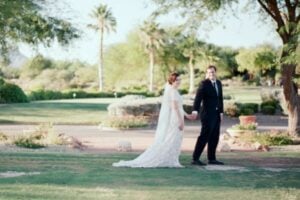
The fastest way to feel comfortable in front of a camera is to stop posing and start moving. Photographers who use simple prompts and light direction, instead of asking you to hold a rigid pose, help even the most camera-shy clients look natural within the first few minutes of a session. If you’ve ever frozen up not knowing what to do with your hands, this is exactly why, and exactly how to fix it.
Why Feeling Awkward in Photos Is So Common
Almost everyone feels some version of camera-shy, and it’s rarely about how someone actually looks. It’s about pressure: the sense that there’s one “correct” way to stand, smile, or hold your hands, and that getting it wrong will show. That pressure is what creates stiff shoulders, forced smiles, and hands that don’t know where to go.
The good news: none of that comes from your photographer expecting you to already know how to pose. It comes from the opposite: a session where you’re expected to not know, and where the direction fills that gap for you.
What Actually Helps: Movement Over Posing
Static poses are hard to hold naturally for more than a second or two — which is exactly why so many posed photos look stiff. Movement solves this. A few examples of prompt-based direction that consistently produces natural results:
- Walking toward or away from the camera, rather than standing still
- A small, repeated action: adjusting a jacket, laughing at something just said, glancing at your partner
- Light physical contact prompts, a hand on a shoulder, an arm around a waist: that give hands somewhere natural to go
- Conversation during the shoot, so genuine expressions happen between “poses” rather than only during them
None of this requires the client to perform. It just requires trusting the prompts.
What to Do With Your Hands (The #1 Question)
This is the single most common concern camera-shy clients raise, so it deserves a direct answer:
- Give them a task. Holding a jacket, adjusting a cuff, touching your partner’s arm; hands relax when they have something small to do.
- Avoid stiff, symmetrical placement. Hands at your sides or clasped in front tend to look tense. A slight bend at the elbow or a hand in a pocket reads far more natural.
- Let a prompt distract you from thinking about them at all. The moment you’re focused on a laugh or a conversation, your hands typically settle into a natural position on their own.
How to Prepare If You’re Nervous Going In
- Wear something you already feel confident in. This isn’t the day to try a brand-new, untested outfit.
- Arrive a few minutes early. A short window to settle into the space before shooting starts reduces first-minute stiffness.
- Say it out loud. Telling your photographer “I get awkward in photos” is genuinely useful information; it lets them adjust prompts and pacing specifically for you from the first frame.
- Expect the first few minutes to feel the most unnatural. Almost everyone warms up within 5–10 minutes once the initial self-consciousness fades.
This Applies to Weddings, Portraits, and Headshots Alike
Camera-shyness isn’t limited to one type of session; it shows up just as often on wedding days and in professional headshot sessions as it does in couples portraits. The same principle applies across all of them: light, prompt-based direction consistently outperforms rigid, static posing, regardless of the occasion.
For wedding-day nerves specifically, this is also where an unscripted, photojournalistic approach helps; when the goal isn’t a perfectly held pose but a real, in-the-moment reaction, there’s nothing to “get wrong.”
FAQ
Why do I feel so awkward in photos?
Most people freeze because they’re trying to hold what they think is a “correct” pose. Movement and prompt-based direction remove that pressure entirely.
What should I do with my hands during a photoshoot?
Give them a small task, adjusting a jacket, a light touch on your partner, holding a prop, rather than trying to hold them still. A busy hand relaxes faster than an idle one.
How can I prepare if I’m nervous about my session?
Wear an outfit you already feel confident in, arrive a few minutes early to settle in, and tell your photographer directly that you’re nervous; it changes how they direct you.
Do professional photographers give posing direction during the shoot?
Yes — and for camera-shy clients specifically, that direction should be light, frequent, and movement-based rather than a handful of static poses held for a long time.
Is a camera-shy client still able to get great wedding or headshot photos?
Absolutely. Camera-shy clients often end up with some of the most natural results, precisely because prompt-based direction is built around removing the pressure that causes stiffness in the first place.
Nervous about your upcoming session? Book a portrait session, explore headshot and branding options, or get in touch: mention that you’re camera-shy, and the whole session gets built around it.